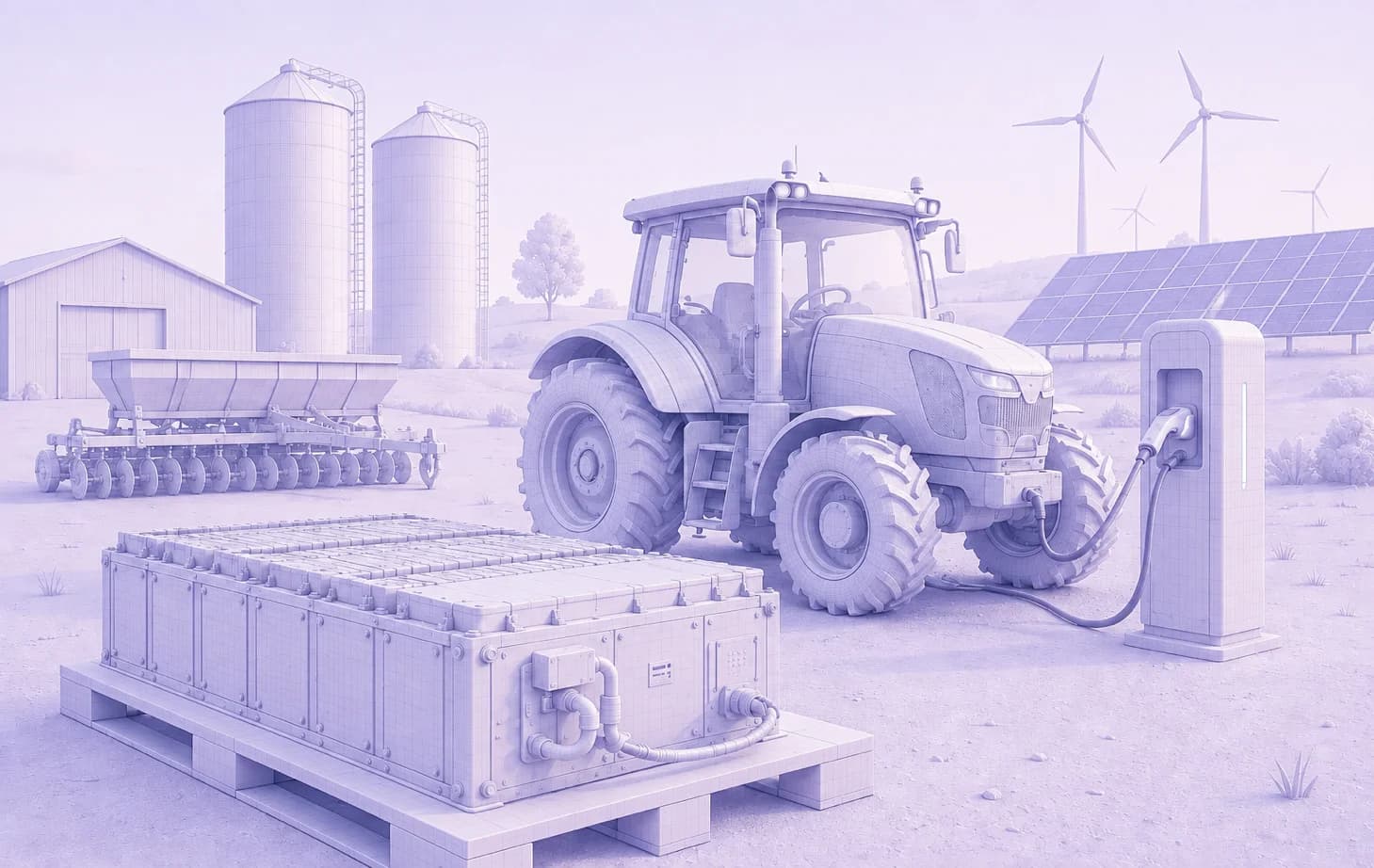
Does off-highway machinery need an EU battery passport?
Yes, where its batteries are in scope. Off-highway machinery batteries are assessed against the same industrial battery threshold as other sectors: rechargeable industrial batteries above 2 kWh need a passport, accessible through a QR code, before they can be placed on the EU market or put into service from 18 February 2027. This applies whether the battery powers a telehandler, an excavator, a sweeper or an agricultural machine. The obligation is forward-looking, not retroactive: a machine already placed on the EU market or put into service before that date does not need a passport added after the fact, but a replacement or refurbished battery pack supplied afterwards is a new placement on the market and needs a passport of its own.
This matters more for off-highway machinery than for many other sectors, because construction, mining and agricultural equipment typically stays in service for a long operating life, and battery packs get replaced or refurbished over that lifetime. OEMs and battery suppliers who assume the passport is a one-off, at-launch task will find themselves issuing passports for spares and refurbished packs for years after the original machine was sold.
Where the battery passport sits alongside existing certifications
Off-highway batteries already carry a stack of certifications before they reach the passport conversation: UN38.3 for transport safety, ECE R100 for electric vehicle safety, ISO 12405 for lithium-ion battery test procedures, and IP ratings for ingress protection against the dust, vibration and water exposure typical of construction and mining sites. The battery passport does not replace any of these. It sits alongside them as a separate, digitally accessible record.
In practice, the passport is expected to draw on this existing certification evidence rather than duplicate it: test reports and certificates that already exist as supporting documentation become part of the digital record referenced through the QR code, rather than paperwork filed away and disconnected from the battery itself.
For OEMs already managing UN38.3, ECE R100, ISO 12405 and IP rating compliance per battery pack, extending that same data discipline to feed a passport record is incremental rather than a wholesale new process. The main change is linking documentation that already exists to a QR-accessible digital record, rather than treating it as filing.
In practice this plays out differently by machine type: a mining excavator battery might need an IP66 or IP67 rating and extended shock-and-vibration test data behind it, while a smaller battery-electric agricultural tool spends most of its life under cover and needs a lighter evidence package. The passport does not set new pass marks for any of this. It just needs the OEM's existing rating and test evidence linked to the specific battery record, rather than living only in a technical file.
Who is responsible for an off-highway battery passport?
Responsibility sits with the economic operator who places the finished battery on the EU market or puts it into service - the party selling a battery that can perform its intended function and operate safely.
In off-highway machinery, this plays out in two different ways depending on how the battery reaches the customer. Where a specialist battery manufacturer sells a pack to a machinery OEM as a component, and the OEM builds it into a telehandler, excavator or agricultural machine before the finished machine is placed on the market, the OEM is usually the party putting the battery into service and therefore the responsible operator for it. Where a battery is instead sold as a standalone spare or replacement pack, direct to a dealer or end customer, the battery manufacturer or distributor placing that pack on the market separately carries the obligation for that unit in its own right.
Contracts between battery suppliers and machinery OEMs should settle which of those two situations applies to each product line now. Passport data needs to flow from cell and pack level through to the finished machine either way, and leaving 'placing on the market' undefined between supplier and OEM creates a compliance gap neither party will want to discover close to the deadline.
A battery passport software gives both sides a shared, structured record to settle that question against, rather than relying on spreadsheets and email threads.
What data does an off-highway battery passport need to include?
The passport covers battery composition, capacity and performance, durability, carbon footprint where applicable, due diligence information and safety data, tied to the specific battery pack fitted to each machine rather than a generic product line.
For the complete data model, and how the durability and safety fields map onto certification evidence you already hold, see our EU battery passport data points guide.
Managing passport data for customised and configure-to-order machines
Unlike consumer or automotive batteries, off-highway machinery is frequently built to order or in small configurable batches. OEMs should expect per-machine or per-order battery configurations rather than a single catalogue model, since capacity, cell chemistry and pack layout can all vary between otherwise similar machines depending on the duty cycle and options ordered.
This complicates how a manufacturer defines a stable 'model' for passport purposes. Where a battery passport is expected to correspond to a battery model or unit, an OEM whose configurations shift order by order needs a way to apply passport data consistently across a product line without treating every variant as a bespoke, manually authored record.
The practical answer is to treat passport data generation as part of the build process rather than a static reference document. Tying passport records to the bill of materials for each order means a passport can be generated automatically as part of production, following the same order-driven process that already defines the rest of the machine.
Concretely, that means treating the passport generator the same way a production system already treats a bill of materials: when an order specifies a particular cell supplier, pack capacity and battery management system, that same specification should trigger the correct passport record automatically, rather than requiring someone to draft a new one by hand for every non-standard build.
Key date for off-highway machinery OEMs
The regulation's obligations apply on a phased timeline shared with every other industrial battery category, including the 2024 regulation start date, the 2026 carbon footprint obligation and the 2027 supply chain due diligence deadline. Our EU battery passport timeline covers the full schedule; the date that applies directly to off-highway machinery is:
Battery passport mandatory
Every industrial battery above 2 kWh placed on the EU market or put into service needs a QR-accessible passport under Article 77. This is the deadline that affects new construction, mining and agricultural machinery sold into the EU, as well as replacement battery packs sold after this date.
How off-highway machinery OEMs can prepare
1. Map battery packs to machine configurations Audit which machine variants and configurations use which battery packs, since customised and configure-to-order builds mean passport scope is not a simple one-to-one match with a single catalogue model.
2. Consolidate existing certification data Gather UN38.3, ECE R100, ISO 12405 and IP rating documentation per battery pack so it is ready to link into passport records, rather than scattered across suppliers' paperwork.
3. Clarify responsibility with battery suppliers Agree contractually whether the OEM is putting the battery into service as part of the finished machine, or whether the battery manufacturer is placing it on the market separately as a spare or replacement pack, and build data-sharing obligations into supply agreements accordingly.
4. Build a data pipeline that follows the build order Design passport data generation to draw from the bill of materials and production order for each machine, rather than maintaining a static, per-model reference sheet.
5. Plan for the aftermarket Off-highway machinery has a long working life, so plan for replacement and refurbished battery packs placed on the market after 18 February 2027 needing passports of their own.
Off-highway battery passport FAQ
Is a telehandler covered by the same rules as an indoor forklift?
The underlying rule is identical: both are industrial batteries above 2 kWh and need a passport from 18 February 2027 either way. The difference is which guide is relevant to your compliance work. Telehandlers, excavators and other outdoor construction, mining and agricultural machinery are covered here, while indoor and site-based material handling equipment such as forklifts, pallet trucks and warehouse AGVs is covered in our industrial battery passport guide, since the responsibility and certification questions differ by operating environment.
Does the battery passport apply to mining equipment used only on private sites, not public roads?
Yes. The obligation is tied to placing the battery on the EU market or putting it into service, not to whether the machine ever uses public roads. Mining and construction equipment operating exclusively on private sites is still in scope if its battery is above 2 kWh.
Do UN38.3 and ECE R100 certificates replace the need for a battery passport?
No. These certifications address transport safety and vehicle safety respectively, while the battery passport is a separate digital record covering composition, performance, durability and due diligence data. Existing certificates typically become supporting documentation referenced by the passport rather than a substitute for it.
How does a manufacturer handle passport data when every machine has a different battery configuration?
This is a common challenge in off-highway machinery. Rather than authoring a passport per catalogue model, manufacturers building to order need a data system that generates passport records per configuration, driven by the bill of materials for each build.
Does a battery already installed in machinery before 18 February 2027 need a passport?
No. The obligation is not retroactive. A battery already placed on the market and in service before the deadline does not need a passport added retrospectively, though a replacement battery supplied after that date would need one.
A note on pending implementing acts
Several of the technical specifications behind the battery passport, including the exact data fields, format and access rules, are still being finalised through implementing and delegated acts. The obligations described on this page come from the Regulation itself; where technical detail is still pending, we have noted this.