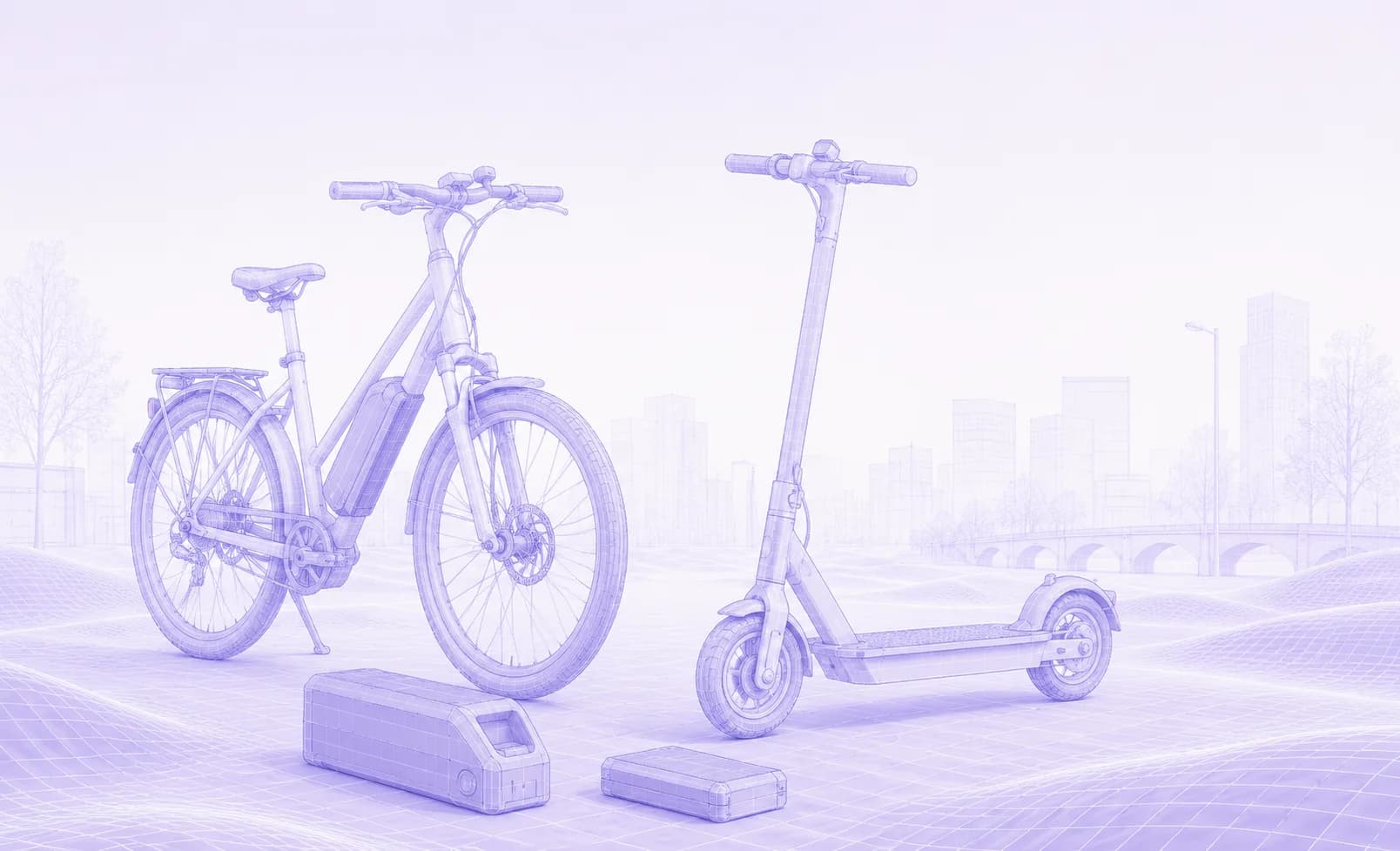
Does your e-bike battery need a passport?
Yes, from 18 February 2027. LMT batteries sit alongside EV batteries and industrial batteries above 2 kWh as the three categories that Regulation (EU) 2023/1542 requires to carry a battery passport. Every e-bike or e-scooter battery placed on the EU market or put into service from that date must have its own passport - whether it ships inside a new bike, as a spare part, or as part of a conversion kit.
The passport obligation is not retroactive for batteries already placed on the market before 18 February 2027 - bikes and scooters already sold do not need passports added after the fact. The trigger is the battery being placed on the EU market or put into service, not the age of the vehicle it goes into: a replacement battery sold for a 2024 e-bike after the deadline is newly placed on the market and needs a passport of its own.
That matters commercially because e-bike batteries are replaced often - typically every 3 to 5 years of regular use. Even brands whose current stock clears before the deadline will be selling passport-carrying batteries through their spares and service channels within months of it.
What counts as an LMT battery: the 25 kg rule
The regulation defines an LMT battery as one that is sealed, weighs 25 kg or less, and is designed to provide electric power for the traction of wheeled vehicles powered by an electric motor alone or by a combination of motor and human power - including type-approved L-category vehicles - and that is not an electric vehicle battery.
In practice that captures pedal-assist e-bike packs, e-scooter and e-moped batteries, hoverboard and e-cargo-bike batteries. The boundaries matter at the edges: a battery above 25 kg, or one powering a vehicle that falls outside the LMT definition, is generally treated as an EV or industrial battery instead - a different category with different deadlines, including an earlier carbon footprint obligation. See our EV battery passport guide for where that line is drawn.
The category a battery falls into is therefore worth confirming early, ideally at design or sourcing stage. It determines not just whether a passport is needed but which set of obligations and dates apply to it.
Who is responsible: brand, importer or cell maker?
The passport obligation falls on the economic operator placing the battery on the EU market - not necessarily whoever manufactured the cells. For most of the bike industry, where packs are sourced from Asian suppliers, that means the bike brand or its EU importer carries the obligation, even though the underlying cell and pack data originates upstream.
This is the practical crux for e-bike brands: you can delegate the data gathering to your battery supplier, but not the responsibility. If your supplier cannot provide material composition, performance data or manufacturing information, it is still your product that cannot legally be sold in the EU.
Brands selling under their own name typically become the responsible operator the moment the battery enters the EU market under that name. Sourcing contracts and supplier data requirements are where compliance is won or lost, long before February 2027.
What an e-bike battery passport must contain
The passport is a structured digital record tied to the individual battery through a unique identifier, accessible via a QR code on the battery itself. For LMT batteries it is expected to carry the battery's identity and model, manufacturer information, chemistry and material composition, capacity and performance characteristics, and information relevant to use, repurposing and end-of-life handling.
Some of that data is public to anyone scanning the QR code; other elements are restricted to those with a legitimate interest, such as repairers, recyclers and market surveillance authorities. The pack maker, the brand and the importer each hold pieces of the picture, which is why data collection across the supply chain is the long pole in any compliance plan.
The exact field list comes from Annex XIII and the implementing acts, and final obligations should be confirmed against them as they are adopted. The full breakdown by data category is in our EU battery passport data points guide.
Removability and replaceability
From 18 February 2027 - the same date the passport obligation begins - LMT batteries, and individual battery cells within the pack, must be removable and replaceable by an independent professional at any time during the vehicle's lifetime. Glued-in packs and designs that only the original manufacturer can service are exactly what this provision targets.
This is a product design obligation rather than a data one, and it has the longest lead time of any requirement on this page. A pack that fails the removability test cannot be fixed with paperwork, which is why design reviews belong at the start of a 2027 compliance plan, not the end.
Carbon footprint disclosure
A carbon footprint declaration is also coming for LMT batteries, but later than for EV batteries: it applies from 18 August 2028, or 18 months after the relevant implementing act enters into force if that is later. Until those acts are adopted, the exact start date should not be treated as settled.
The extra runway matters less than it appears. The lifecycle assessment groundwork - manufacturing site data, energy use, upstream material footprints - depends on the same suppliers as the passport data, so most brands gather both in the same exercise.
Software that consolidates supplier data, tracks the implementing acts and generates the passport handles the mechanics of both obligations - see our battery passport software for how Circuland does it.
Key dates for e-bike and e-scooter brands
These are the milestones that matter specifically for LMT batteries. The full cross-category schedule is in our EU battery passport timeline.
Battery due diligence policies apply
Economic operators with a net turnover of EUR 40 million or more must operate supply chain due diligence policies covering raw materials such as cobalt, lithium, natural graphite and nickel. Smaller bike brands fall below the threshold, but their cell suppliers generally do not - expect due diligence data to flow through sourcing contracts.
General labelling requirements phase in
Labelling requirements - manufacturer, battery category, capacity and hazardous substances, alongside the separate collection symbol - begin to phase in, subject to implementing acts and category-specific timing.
Battery passport becomes mandatory
Every LMT battery placed on the EU market or put into service from this date must have a battery passport, accessible through a QR code on the battery.
Removability and replaceability rules apply
From the same date, LMT batteries and individual cells within the pack must be removable and replaceable by an independent professional at any time during the vehicle's lifetime.
Carbon footprint declaration for LMT batteries
The declaration per battery model and manufacturing plant starts from this date, unless a later date applies because the relevant implementing act enters into force less than 18 months earlier.
51% collection target for waste LMT batteries
Member states must reach a 51% collection rate for waste LMT batteries, funded through extended producer responsibility - rising to 61% by the end of 2031.
How bike and scooter brands can prepare
Confirm your battery categories. Check each pack you sell against the LMT definition - sealed, 25 kg or less, traction for motor or motor-plus-pedal vehicles. Anything at the boundary needs a documented categorisation, because the category sets the obligations and the dates.
Map who places each battery on the EU market. For every SKU - built-in, spare or conversion kit - identify the responsible economic operator. If that is you, the passport obligation is yours regardless of where the pack is made.
Get data commitments into supplier contracts now. Material composition, performance characteristics and manufacturing data all originate with the cell and pack makers. Lead times on contractual changes are long; February 2027 is not.
Check your pack design against the removability rules. Batteries and individual cells must be removable and replaceable by independent professionals from the same date the passport applies. A design change discovered in 2026 is expensive; one discovered in 2027 blocks sales.
Choose how you will generate and host the passports. Each battery needs a unique identifier, a QR code and a hosted passport record with public and restricted access levels. Building this in-house is possible; most brands will use a platform instead.
E-bike battery passport FAQ
Do e-bike batteries need an EU battery passport?
Yes. E-bike batteries are LMT batteries under Regulation (EU) 2023/1542, and every LMT battery placed on the EU market or put into service from 18 February 2027 must carry a battery passport accessible via a QR code on the battery.
Does an e-scooter battery count as an LMT battery?
Almost always. An LMT battery is sealed, weighs 25 kg or less and powers the traction of a wheeled vehicle driven by an electric motor alone or with human power - which covers typical e-scooter, e-moped and hoverboard batteries. Heavier batteries or those outside the definition fall into the EV or industrial categories instead.
Our batteries come from an Asian supplier. Who creates the passport?
The obligation sits with the economic operator placing the battery on the EU market - usually the bike brand or its EU importer, not the overseas pack maker. Suppliers provide the data, but the legal responsibility cannot be delegated upstream.
Do replacement batteries and conversion kits need passports too?
Yes. Every LMT battery placed on the EU market from 18 February 2027 needs its own passport, whether it ships inside a new bike, as a spare part or as part of a conversion kit. The cut-off follows the battery, not the vehicle.
What about e-bikes already sold before 2027?
Nothing changes for them. The requirement is not retroactive, so batteries already placed on the market before 18 February 2027 do not need a passport added later. Their replacement batteries, however, will.
Do e-bike batteries need a carbon footprint declaration in 2027?
Not yet. The carbon footprint declaration for LMT batteries applies from 18 August 2028, or 18 months after the relevant implementing act if later - a later start than EV batteries. The 2027 obligations are the passport itself and the removability and replaceability requirements.
A note on timing
This page summarises battery passport expectations for LMT batteries as they stand. Field-level obligations depend on Annex XIII and implementing acts still being adopted, so final requirements should be confirmed against Regulation (EU) 2023/1542 and its secondary legislation as they take effect.