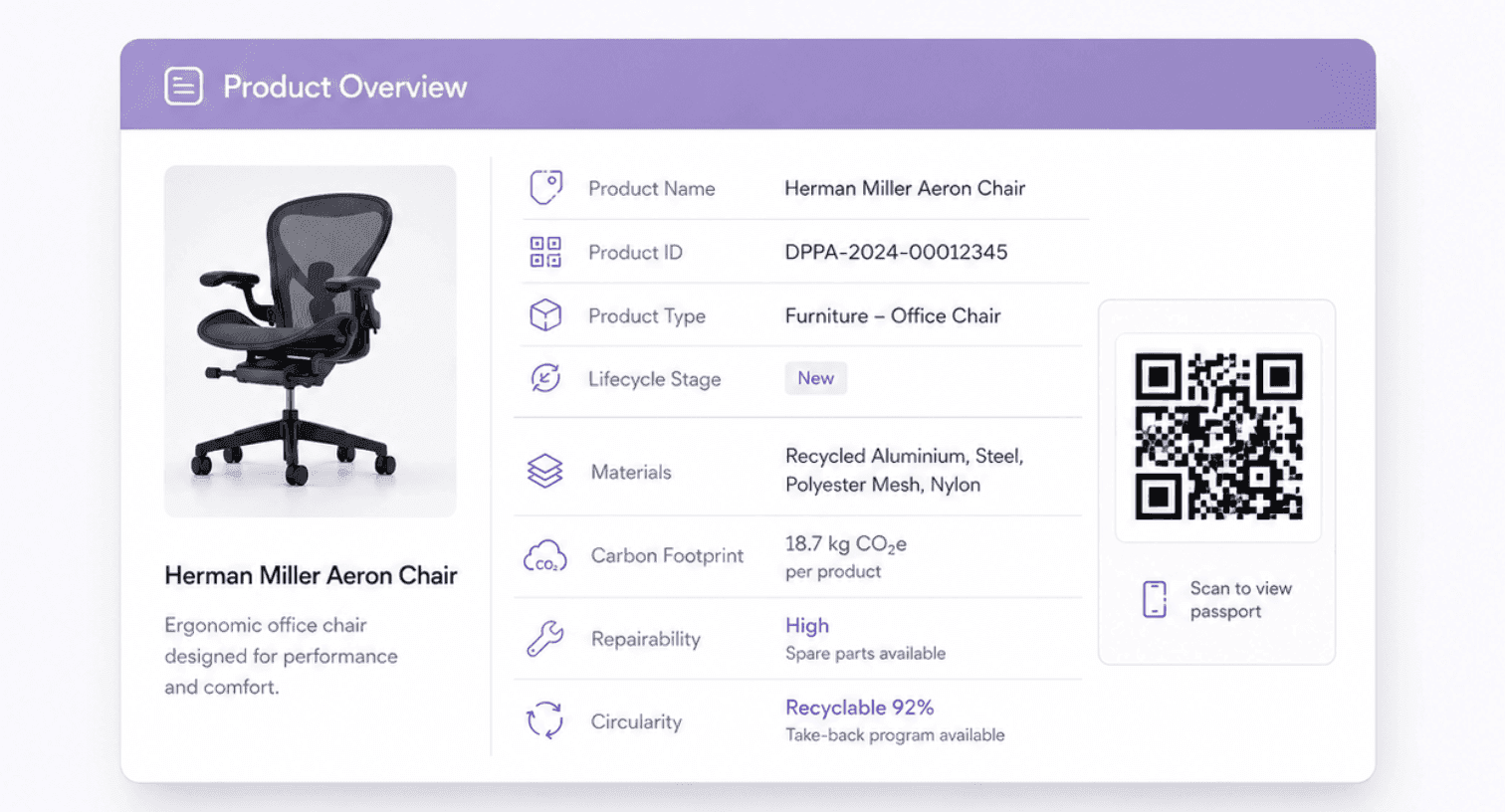
A Digital Product Passport, or DPP, is a structured digital record that links a physical product to verified information about its identity, composition, sustainability, repairability, and end-of-life handling. Under the EU’s Ecodesign for Sustainable Products Regulation (ESPR), DPP requirements will roll out by product group, making this one of the most important compliance shifts for companies selling physical goods into the EU market.
For manufacturers, importers, and distributors, the DPP is no longer a concept to watch from a distance. It is becoming part of the operating model for market access, supply-chain transparency, and circular economy reporting.
What a DPP is
The simplest way to understand a DPP is to think of it as a product’s digital identity file. It contains standardized information that helps buyers, regulators, repairers, recyclers, and other authorized parties understand what the product is, where it came from, what it contains, and how it should be handled across its life cycle.
A DPP is not a brochure, a PDF datasheet, or a sustainability claim page. It is a living, machine-readable data record that is linked to a unique identifier and made accessible through a data carrier such as a QR code, NFC tag, or similar technology.
Why the EU is introducing it
The EU is using the DPP to support two goals at the same time: better product transparency and a more circular economy. ESPR provides the framework, while product-specific delegated acts define the exact data fields, scope, and timing for each category.
That matters because there is no single universal DPP deadline for all products. Instead, the timeline is being phased in by sector, which means companies need to track the act that applies to their product group rather than relying on a general “DPP is coming” headline.
What information it contains
The exact data model depends on the product category, but most passports are expected to include a common core of information. This usually covers product identification, composition, key sustainability metrics, repair and disassembly guidance, and relevant compliance documentation.
In practice, that can include:
-Unique product identifiers and manufacturer details.
-Material composition and substance information.
-Carbon footprint or other environmental performance data.
-Repair, reuse, remanufacturing, and recycling instructions.
-Declarations of conformity, certificates, or safety documentation.
The most difficult part is usually not the passport format itself. It is gathering reliable data from ERP, PIM, PLM, supplier declarations, test reports, and lifecycle assessment inputs that may sit across several internal systems and multiple tiers of the supply chain.
Which products are affected
DPP requirements will not apply to every product at once. The Commission is rolling them out by priority product group, with textiles, tyres, furniture, metals, and some electronics among the categories identified in public EU materials and industry guides.
Batteries are the clearest fixed-date example. Under EU battery rules, certain batteries placed on the market will need a passport from 18 February 2027, which makes batteries the first major DPP implementation model companies can study today.
For other categories, the safest way to speak is in terms of expected implementation windows rather than hard legal deadlines, because the binding requirements depend on delegated acts that are still being finalized.
How the battery passport fits in
The battery passport is the most concrete example of how DPPs will work in practice. It is designed to provide traceability, technical documentation, and lifecycle information for batteries, including EV batteries, light-transport batteries, and industrial batteries above 2 kWh.
Its importance goes beyond the battery sector. The battery model shows how the EU expects product-level transparency to work: a unique identifier, a data carrier, access control for sensitive fields, and a chain of verified data that can support compliance, reuse, and recycling decisions.
How it works in practice
A DPP generally relies on four building blocks:
A unique identifier that ties the passport to a specific product or batch.
A data carrier, such as a QR code, that connects the physical product to the digital record.
Access tiers that separate public information from restricted technical data.
A registry or verification layer that helps authorities confirm that the passport exists and is valid.
The point is not to create another isolated database. The point is to connect existing product data so it can be updated, governed, and reused across compliance, service, and circularity workflows.
Why it matters for business
The obvious reason to care about DPPs is compliance. Missing or incomplete passport data can eventually become a market-access problem for products covered by a delegated act or sector-specific rule.
The less obvious reason is commercial. Companies that build trustworthy product data now will be better positioned for repair, resale, refurbishment, and take-back models later, because they will already have the underlying information needed to support those services.