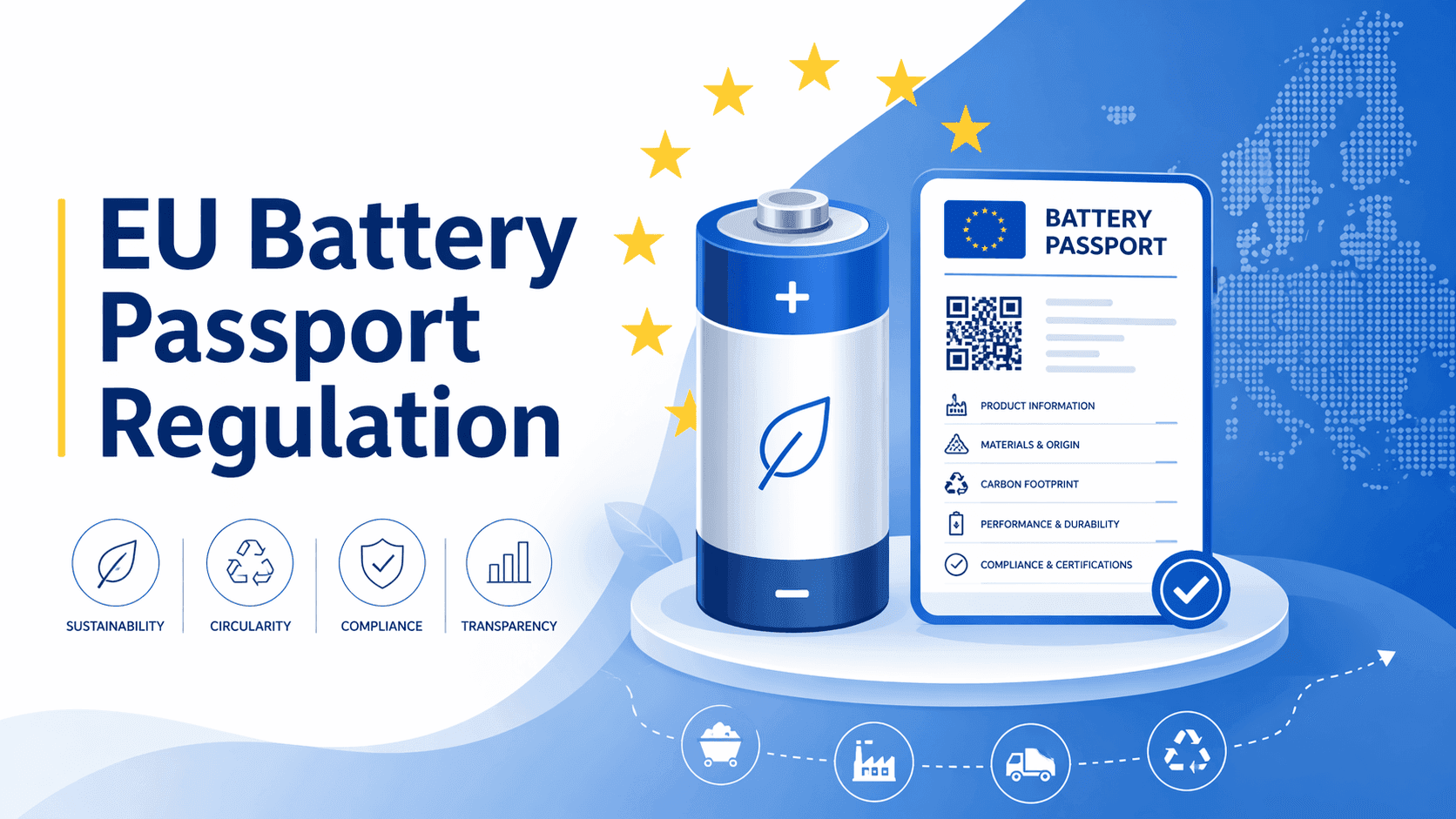
The EU Battery Regulation is no longer a future concern,it's an immediate reality. With the current date being April 2026, the final countdown to the mandatory introduction of Digital Battery Passports has begun. For any business involved in the battery value chain, the time for strategic planning is over; the time for implementation is now.
This article outlines the critical deadlines you must meet before 2027 and provides an actionable roadmap to navigate the complex requirements. The goal is not just to ensure compliance and avoid market exclusion, but to transform this regulatory challenge into a powerful competitive advantage.
Who is Affected by the EU Battery Regulation?
The regulation’s scope is broad, creating a new set of obligations for nearly every actor in the battery lifecycle. However, the weight of responsibility is not distributed evenly.
Directly Impacted: Economic operators placing batteries on the EU market—including original equipment manufacturers (OEMs), battery producers, importers, and distributors—face the most significant compliance burden. They are legally accountable for creating and maintaining the battery passport, ensuring all its data is accurate, complete, and accessible.
Indirectly Impacted: The entire upstream and midstream supply chain is also profoundly affected. This includes raw material miners, processors, and manufacturers of cells and components. While not directly reporting to EU authorities, they are contractually obligated to provide their downstream partners with the vast amount of data required for the passport. The commercial risk is clear: failure to supply this data in a structured, timely manner could lead to being designed out of major European supply chains.
The Digital Battery Passport: More Than Just a QR Code
At the core of the new regulation is the Digital Battery Passport, a dynamic digital record that must accompany every EV, LMT (light means of transport), and industrial battery (with a capacity over 2kWh) placed on the EU market from February 2027.
Accessible via a QR code, this passport centralises critical information across the battery’s entire lifecycle. Key data points include:
General & Technical Data: Manufacturer details, battery model, material composition, and performance specifications.
Sustainability & Compliance: Audited carbon footprint calculations, recycled content percentages, and supply chain due diligence information for materials like cobalt, lithium, nickel, and natural graphite.
Lifecycle Information: Dynamic data from the Battery Management System (BMS) such as state of health (SoH), as well as indelible records of repair, repurposing, and remanufacturing events.
The real challenge is not just creating a static passport, but implementing the right tools to manage the battery passport data supply chain. Selecting a basic solution risks creating another data silo, making it impossible to effectively collaborate with suppliers and prove compliance. An effective battery passport solution cannot function without strong collaboration tools, as a lack of supplier adoption can lead to critical data gaps and the risk of having products barred from the EU market Battery Passport Platform Providers.
Critical Deadlines for 2027 and Beyond
With less than a year until the main event, the timeline is tight. Here are the key dates your organization must have mastered.
February 2025: Carbon Footprint Reporting (Deadline Passed)
The first major regulatory hurdle has already passed. Since February 2025, producers of EV batteries have been required to report the total carbon footprint of their products EU Battery Regulation 2027: Timeline & Deadlines . This exercise served as a stark reminder of the immense difficulty in collecting granular, verified data from every tier of a global supply chain.
February 2027: The Final Countdown to Mandatory DPPs
This is the non-negotiable deadline. From February 18, 2027, every EV, LMT, and industrial battery (>2kWh) placed on the EU market must have a compliant Digital Battery Passport. This requires a fully operational system for data collection, validation, and sharing. A compliant battery passport solution for EV manufacturers in Europe is no longer optional; it is an urgent business necessity. Without it, your products will be denied access to the market.
August 2027: Due Diligence Obligations Take Effect
Though originally scheduled for 2025, this requirement was postponed to August 18, 2027, giving companies more time to establish robust processes Battery Due Diligence Updates 2025. The obligation applies to companies with an annual net turnover above €150 million and mandates policies to identify, prevent, and mitigate social and environmental risks in the raw material supply chain. The risk here extends beyond non-compliance to significant reputational damage from links to human rights or environmental abuses.
An Actionable Roadmap for 2027 Compliance
Waiting any longer is not a viable strategy. The primary obstacle for most companies is coordinating data across complex, fragmented supply chains where essential information is scattered across PDFs, spreadsheets, and siloed supplier portals. Here is a practical roadmap to accelerate your progress.
1. Perform a Data Gap Analysis (Now)
You cannot manage what you do not measure. A thorough gap analysis is the essential first step to understanding your current state and the work ahead. This process will help you:
Map every data point required by the regulation against your current data assets.
Identify which data is missing, incomplete, or unverified.
Pinpoint where this data resides, both internally across different departments (procurement, sustainability, engineering) and externally with specific suppliers.
Assess the readiness of your current IT systems and internal processes to handle this new data flow.
2. Select a Strategic Technology Partner
Many companies ask, what software do companies use for battery passports? While some may attempt to build a system in-house, this is a resource-intensive and high-risk path. The market now offers mature, specialised platforms designed for this purpose.
When you compare battery passport platforms in Europe on features and pricing, look beyond basic compliance checklists. The best battery passport platform for Europe is one that acts as an integration engine, not another data silo. A battery passport compliance platform for EU 2027 requirements like Circuland uses AI-powered agents to automate the collection, structuring, and validation of data from diverse sources—including supplier PDFs, spreadsheets, and existing enterprise systems. This approach minimises manual effort, reduces human error, and dramatically accelerates your path to compliance. An effective AI platform for Digital Product Passports should integrate seamlessly with your business, not complicate it.
3. Prioritize Data Integration and Supplier Collaboration
With a platform selected, the real work of implementation begins. Focus your efforts on three key areas:
Supplier Engagement: Immediately initiate a structured outreach program to your entire supply chain. Clearly communicate your data requirements and timelines. The sooner you start this dialogue, the more time you will have to resolve the inevitable data gaps and quality issues.
System Integration: Connect your Digital Product Passport solution with your existing Product Lifecycle Management (PLM), Product Information Management (PIM), and Enterprise Resource Planning (ERP) systems. This creates a single, verifiable source of truth and ensures your passports are always populated with the most current, accurate data.
Internal Governance: Establish a cross-functional team with executive sponsorship and clear representation from procurement, sustainability, IT, legal, and compliance. Define ownership for data streams and processes to navigate the regulation’s complexities and prevent costly project delays.
The February 2027 deadline is not a distant milestone—it is an immediate strategic priority. Companies that act decisively to implement a robust data management strategy will not only secure their access to the EU market but will be best positioned to unlock the immense commercial value of transparency, efficiency, and the circular economy.