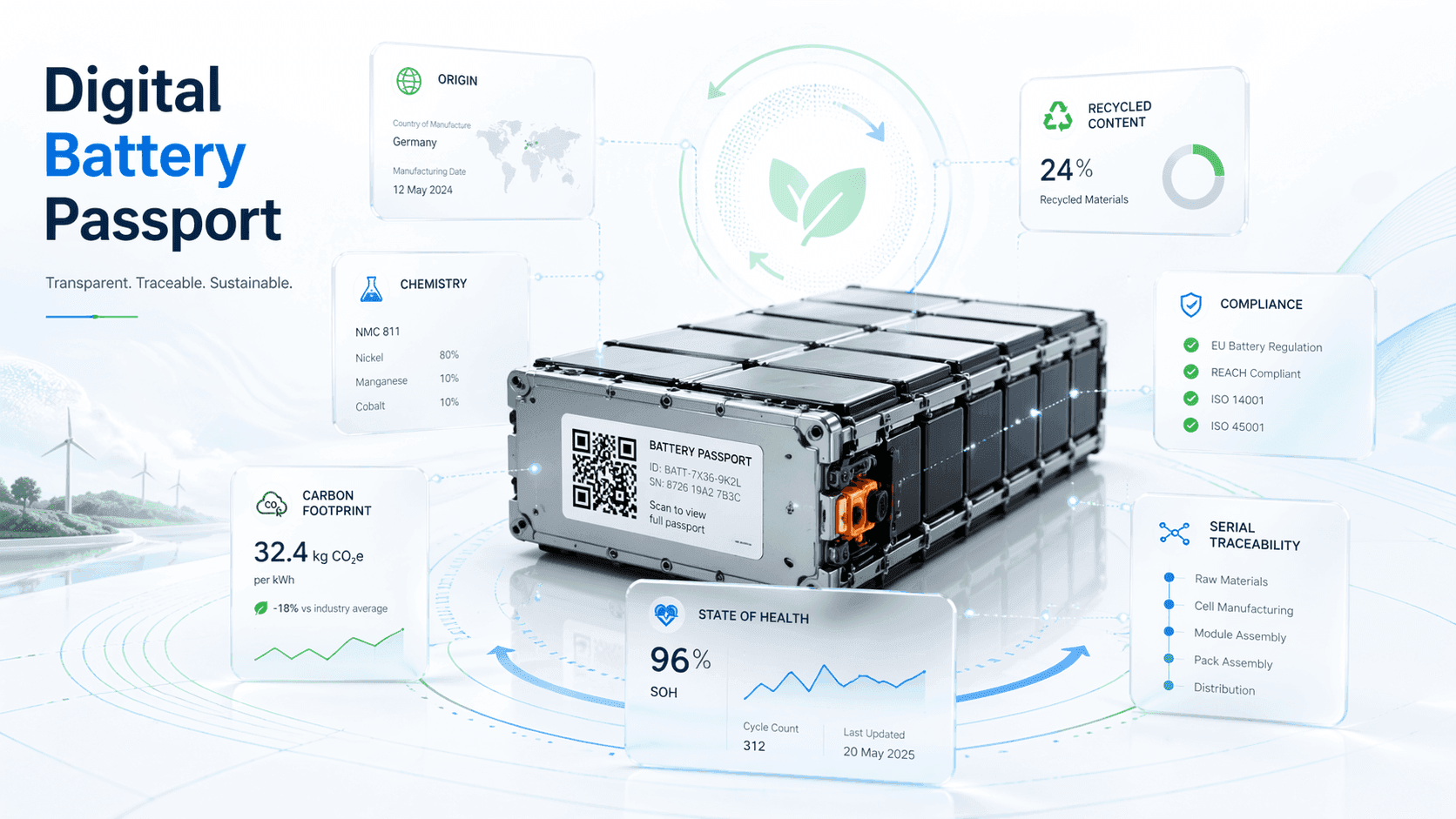
The European Union is transforming how batteries are produced, used, and recycled. The EU Battery Regulation entered into force in August 2023 and has been applying in stages since then, culminating in a mandatory Digital Product Passport (DPP),known as the Battery Passport,for many batteries by early 2027. The regulation repeals Directive 2006/66/EC and replaces the old directive framework. and sets a new global standard for sustainability and transparency in the industry.
Part of the wider Ecodesign for Sustainable Products Regulation (ESPR), the Battery Regulation is the first to mandate a DPP, making it a critical test case for products across numerous sectors.This landmark legislation aims to create a circular economy for batteries, ensuring they are safer, more durable, and have a lower environmental impact throughout their entire lifecycle.
This guide explains what the Battery Passport is, who it affects, the key deadlines you need to know, and what software companies use for battery passports to ensure compliance.
What is a Battery Passport?
A Battery Passport is a digital record that provides detailed information about a battery's entire journey, from raw material extraction to production, use, and recycling. It acts as a battery's unique digital identity, accessible via a QR code printed on the physical product.
The passport centralises crucial data, making it available to different stakeholders like consumers, businesses, and regulators. The goal is to enhance transparency, promote responsible sourcing, and facilitate second-life applications like repurposing and remanufacturing, ultimately extending the battery's value and minimising waste.
What Information Must a Battery Passport Contain?
The regulation specifies a wide range of data points that must be included in the passport. This information is categorised by access level: public, restricted to notified bodies and market surveillance authorities, and exclusive to specific economic operators with a legitimate interest. The goal is to provide transparency where needed while protecting sensitive commercial data
Key required information includes:
General Product & Supplier Information: Details about the manufacturer, battery type and model, date of manufacture, chemical composition, and unique identifiers.
Carbon Footprint Data: A declaration of the battery's total carbon footprint, covering the entire lifecycle from material sourcing to production and recycling. This must be verified by a third party.
Supply Chain Due Diligence: Information demonstrating compliance with due diligence obligations regarding the sourcing of raw materials like cobalt, lithium, nickel, and natural graphite.
Performance and Durability: Technical information on the battery's capacity, power, expected lifespan, and state of health, which must be updated throughout its life by entities performing repairs or repurposing.
Circularity and End-of-Life Information: Instructions and data to facilitate dismantling, safe handling, reuse, remanufacturing, and recycling.
Who Does the EU Battery Passport Affect?
The regulation applies to all batteries sold in the EU, but the mandatory Battery Passport requirement specifically targets:
Electric Vehicle (EV) batteries
Industrial batteries with a capacity greater than 2 kWh
Light Means of Transport (LMT) batteries (e.g., for e-bikes and e-scooters)
The primary responsibility for creating and maintaining the passport falls on the "economic operator" that first places the battery on the EU market. However, compliance requires collaboration across the entire value chain, including:
Raw material suppliers
Cell and module manufacturers
Battery pack assemblers
Automotive and industrial OEMs
Repair, repurposing, and recycling companies
These actors must provide accurate and timely data to the primary economic operator to ensure the passport remains up-to-date and compliant.
Risks of Non-Compliance
Failing to comply with the EU Battery Regulation carries significant business risks that go far beyond simple fines. Companies that delay creating a clear compliance strategy face severe consequences:
Market Access Denial: Non-compliant batteries will be barred from the EU market. National authorities will conduct checks at the border, and products without a valid and accurate passport will be rejected, effectively halting sales.
Substantial Financial Penalties: Member states will define "effective, proportionate, and dissuasive" penalties for infringements. These fines could be substantial, directly impacting profitability.
Costly Operational Disruption: Authorities can mandate a product recall or withdrawal from the market. This leads to logistical nightmares, immense reverse logistics costs, and potentially millions in written-off inventory.
Severe Reputational Damage: Non-compliance can permanently tarnish a brand's reputation with consumers, investors, and business partners who increasingly prioritise sustainability and transparency.
Direct Legal Liability: The regulation holds operators liable for adverse impacts they cause or contribute to, opening the door for significant compensation claims from parties affected by social or environmental harm in the supply chain.
Key Dates and Deadlines
The Battery Regulation is being implemented in stages. Here is a timeline of the most critical milestones for manufacturers and importers.
18 February 2024: The regulation began to apply. Carbon footprint rules for EV batteries were established.
18 August 2025: was a major application date for several provisions, but the regulation applies in phases.. Due diligence obligations for sourcing raw materials come into force.
18 February 2027: From 18 February 2027, EV batteries, LMT batteries, and industrial batteries above 2 kWh must have a battery passport accessible via QR code .This is the most critical deadline for many businesses
How to Manage Battery Passport Data
Complying with the regulation presents a massive data management challenge. Information must be collected from dozens of suppliers across a global supply chain, verified for accuracy, and shared securely with different stakeholders—all while protecting confidential business information.
This is where a dedicated Digital Product Passport platform becomes essential. These are the tools to manage battery passport data supply chain information effectively. A robust platform should offer:
Centralised Data Management: A single source of truth for all compliance documents, lifecycle records, audit trails, and supplier data.
Secure Data Exchange: The ability for supply chain partners to share necessary information without exposing sensitive IP or confidential commercial details.
System Integration: The capability to connect with your existing enterprise systems like PIM, PLM, and ERP to automate data collection and reduce manual effort.
Real-time Compliance: Automated checks and alerts to ensure data meets regulatory requirements before a product is placed on the market.
For organisations looking for a comprehensive battery passport solution for EV manufacturers in Europe, an advanced platform like Circuland is designed to meet these needs head-on. Circuland is an AI-powered platform for creating and managing Digital Product Passports that simplifies the entire process. It not only centralises compliance data but also uses AI agents to automate data gathering and DPP creation, significantly reducing the administrative burden on your team and ensuring you are prepared for every deadline.
Paving the Way for a Circular Future
The EU Battery Regulation and its mandatory passport are not just a compliance exercise; they represent a fundamental shift towards a more sustainable and competitive European industry. By creating transparency and accountability, the passport unlocks new value by enabling better performance, extending product lifecycles through repair and repurposing, and improving recycling efficiency.
While some technical details are still being finalised, the direction is clear. Companies that act now to implement the right systems and processes will not only mitigate risk but also gain a significant competitive advantage in the green economy.